Schedule a call

Nebula Labs: tools we build to share.

Team Nebula’s open-source program shares tools we build alongside client work.

Explore the projects

How we build

  • Start with work we do ourselves

    We build when we run into a real problem, then use the tool in our own work to see where it helps and where it falls short.

    HyperScale OS started with leads and follow-ups spread across separate tools. That problem shaped a workflow that handles routine steps across channels and hands real replies back to a person.

  • Keep people in control

    We favor local processing where it fits, give automation only the access it needs, and leave consequential decisions to people.

    Blurt runs dictation on the phone. Nebby can read the code it reviews, while the repository’s reviewers and merge rules still decide what ships.

  • Share what others can build on

    We prepare projects for release so developers can read the code, understand the tradeoffs, and adapt the tools to their own work.

    Seeing the code helps a developer answer practical questions before adopting a tool: what runs locally, what permissions it needs, and where a person can step in.

Explore the projects

Compare

Source status is listed on each project.

Why open source

The work should be inspectable.

The source shows what runs locally, what permissions the tool needs, and when a person must approve an action.

The Labs bench
  1. Find the friction

    We start with a workflow we know and identify the step that slows it down.

  2. Build and use it

    We use the tool in our own work and refine it as real tasks expose gaps.

  3. Prepare to share

    We prepare the source so other developers can inspect how it works and adapt it.

Source release comingnebula labs

Blurt

A voice keyboard that transcribes and rewrites without leaving the phone.

  • Transcription on device
  • No audio leaves the phone
  • Account optional, off by default
How we built it: Blurt
The problem
Dictation tools send your voice to someone else's server, which rules them out for anything sensitive.
Our answer
We built Blurt to run speech recognition and rewriting on the iPhone itself, with whisper.cpp and a local language model. The keyboard has no microphone access and makes no network requests.
What changed
You speak, it types, and no audio or transcript is sent anywhere, including to us.
See Blurt
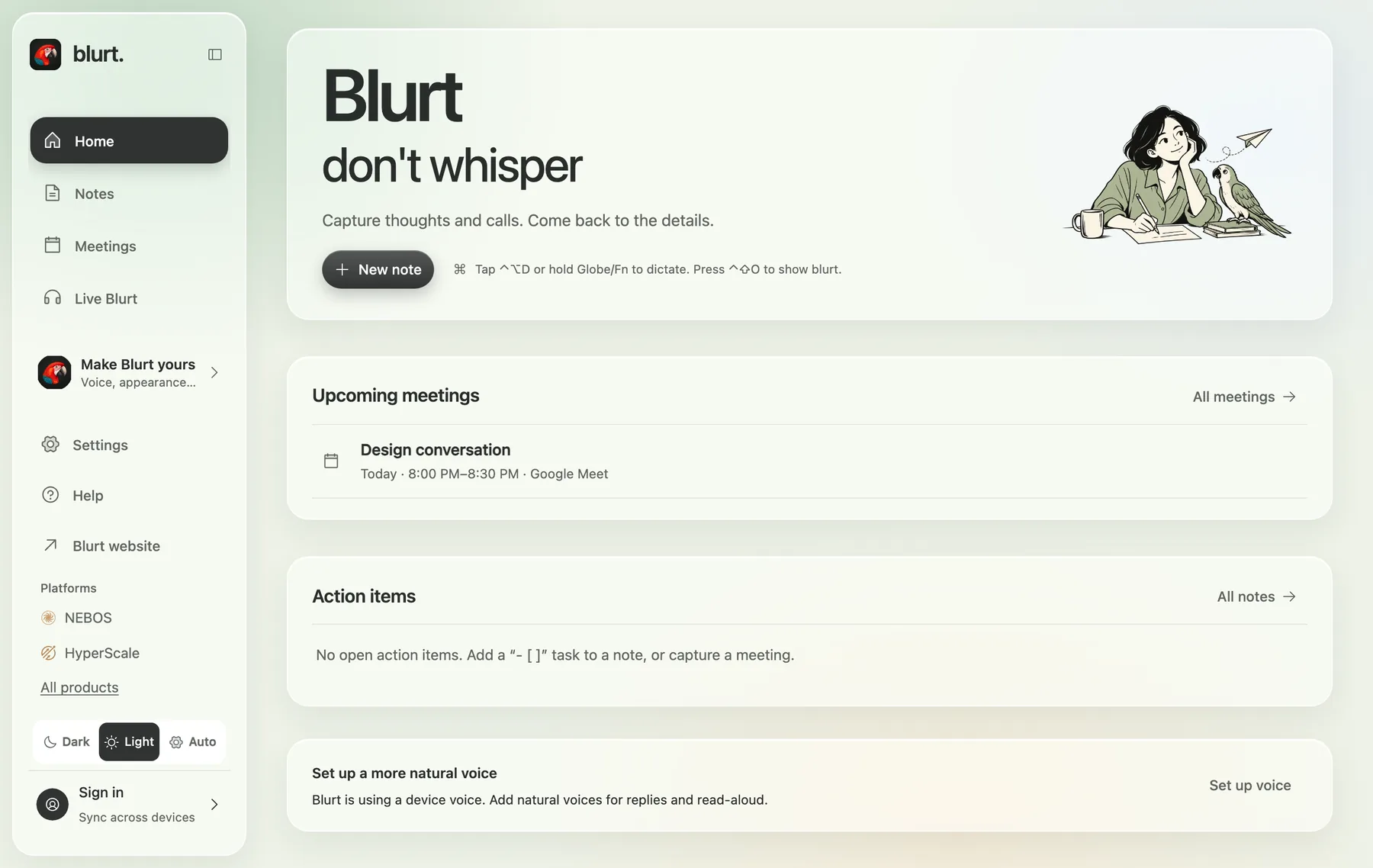
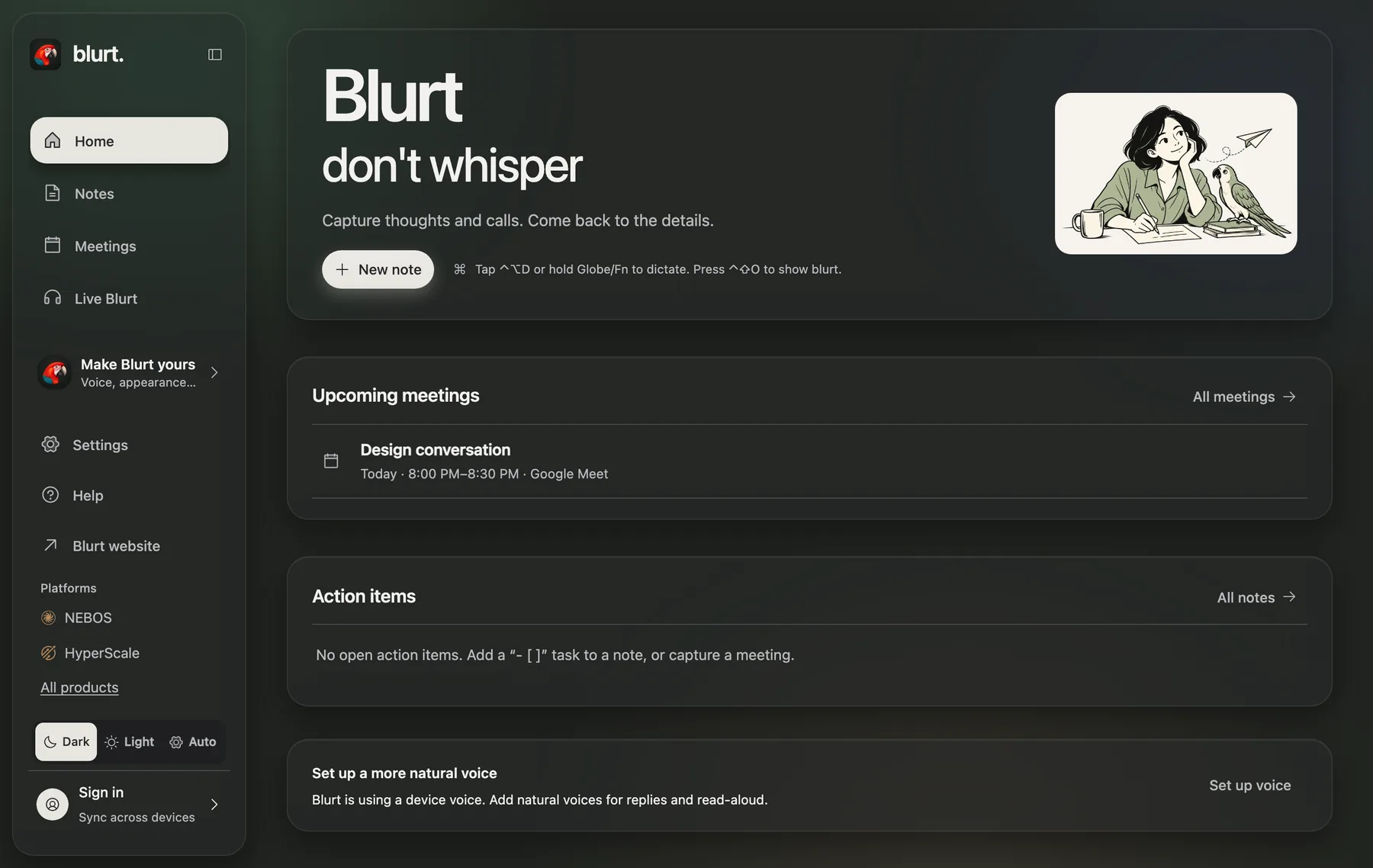
Blurt · Home
Blurt for Mac, Home
Blurt, captured from the app with demo data.
Source release comingnebula labs

HyperScale OS

One reliable workflow for outreach across channels.

  • Multi-channel by default
  • Human handoff on real replies
  • Held to the same governance bar as client work
How we built it: HyperScale OS
The problem
Growth teams were copying leads, messages, and follow-ups between separate tools. Every new channel created another inbox and another place for work to disappear.
Our answer
We built a visual workflow engine that connects targeting, research, outreach, follow-up, and reply handoff across LinkedIn, email, and social channels.
What changed
The routine work keeps moving while people focus on the replies and relationships that need judgment.
See HyperScale OS
HyperScale OS · Campaigns
Campaign · workflow
Q4 operations leaders
Running · 214 prospects
LinkedIn profile view
Warm the account before any ask
Connection request
Personalized note, platform-aware
Wait for connection
Pauses until they accept
Condition: connected?
Yes → message · No → email
Send message
LinkedIn
Send email
Fallback channel
HyperScale OS, drawn from the product. Illustration, demo data.
Source release comingnebula labs

HyperCrawl

A safe bridge between an agent and the websites people use every day.

  • Self-hosted, no third-party data pass-through
  • Exposes any site as a callable tool
  • Runs alongside our own delivery work
How we built it: HyperCrawl
The problem
Useful work often lives behind logins and changing web pages. Brittle scripts break, while third-party scraping services add another place for sensitive browsing data to travel.
Our answer
We built a self-hosted web automation engine that turns approved website actions into tools an agent can call from our own infrastructure.
What changed
Agents can research and complete web tasks while the browser session and control layer stay with us.
See HyperCrawl
hypercrawl_acquire · one run
hypercrawl_acquire permits.county.example/search · needle="permit number"maxUsd 0.05
  1. 1API replay / hydrationno embedded data$0.000
  2. 2Learned toolnone saved for this site$0.000
  3. 3DOM agentneedle found · 42 rows$0.011
  4. 4Set-of-marksnot needed
  5. 5Visionnot needed
  6. 6Specialistnot needed
budget used$0.011 of $0.05
HyperCrawl, drawn from the product. Illustration, demo data.
Source release comingnebula labs

Nebby

A careful AI code reviewer with clear limits and a human final decision.

  • Read-only, scoped access
  • Reviews every pull request in the repositories it watches
  • Same governance bar as client work
How we built it: Nebby
The problem
As our codebase grew, important context could be missed between reviews. A fast reviewer helped—but only if it could inspect code without quietly gaining permission to ship it.
Our answer
We built Nebby with a read-only review identity and a separate, governed path for proposed fixes. It reviews watched repositories and leaves the merge to each repository's own protections and reviewers.
What changed
Every pull request gets a consistent second look without turning an automated reviewer into an unsupervised release manager.
See Nebby
github.com · pull request
Validate tool arguments before execute #482
tm-nebbybotrequested changes
🤖 Nebby review
Needs changes: 1 blocking.
agent/src/turn.ts:95 — [HIGH] — A model can supply missing or mistyped arguments and the runner passes them straight to execute; validate them against the tool's schema first.
NEBBY_CLIENT_WORK: NO
NEBBY_VERDICT: BLOCK
Nebby — context via NebOS — changes requested: blocking findings above.
Review required
A person decides what merges. Nebby's review is advisory.
Nebby, drawn from the product. Illustration, demo data.

Compare

Which project, for which work.

ProjectBuilt forSource
Private dictation on iPhoneSource release coming
Multi-channel outreachSource release coming
The web as agent toolsSource release coming
Reviewing the code we shipSource release coming

For the community

What would you build with it?

Tell us which tool you’d use, what you’d adapt, or what would make it easier to run in your environment. Those are the details we want to hear as we prepare releases.

Tell us what you’re building